





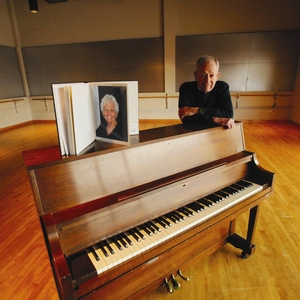
Robert Rosenthal
For more than 50 years, Robert Rosenthal has conducted research on the role of self-fulfilling prophecies in everyday life and in laboratory situations. Special interests include the effects of teacher's expectations on students' academic and physical performance, the effects of experimenters' expectations on the results of their research, and the effects of clinicians' expectations on their patients' mental and physical health.
During this time he has also been studying the role of nonverbal communication in (a) the mediation of interpersonal expectancy effects and in (b) the relationship between members of small groups. In addition, he has explored sources of artifact in behavioral research and in various quantitative procedures. In the realm of data analysis, his special interests are in experimental design and analysis, contrast analysis, and meta-analysis. His most recent books and articles are about these areas of data analysis and about the nature of nonverbal communication in teacher-student, doctor-patient, manager-employee, judge-jury, and psychotherapist-client interaction.
Professor Rosenthal is the recipient of several national awards, including election to Fellow status in the American Academy of Arts and Sciences (2009), the Gold Medal Award for Life Achievement in the Science of Psychology of the American Psychological Foundation (2003), Distinguished Scientific Award for Applications of Psychology (APA, 2002), Distinguished Scientific Contributions Award (APA Division 5, 2002), James McKeen Cattell Award (APS, 2001), Distinguished Scientist Award (SESP 1996), AAAS Prize for Behavioral Science Research (1993, with Nalini Ambady), Donald Campbell Award (SPSP, 1988), and AAAS Socio-Psychological Prize (1960, with Kermit Fode). He has also been a Guggenheim Fellow, Senior Fulbright Scholar, and a Fellow at the Center for Advanced Study in the Behavioral Sciences. Professor Rosenthal served as Co-Chair of the American Psychological Association Task Force on Statistical Inference.
Primary Interests:
- Applied Social Psychology
- Communication, Language
- Interpersonal Processes
- Nonverbal Behavior
- Person Perception
- Research Methods, Assessment
Note from the Network: The holder of this profile has certified having all necessary rights, licenses, and authorization to post the files listed below. Visitors are welcome to copy or use any files for noncommercial or journalistic purposes provided they credit the profile holder and cite this page as the source.
Image Gallery


Video Gallery

The Pygmalion Effect and the Power of Positive Expectations
Select video to watch
-
5:52 The Pygmalion Effect and the Power of Positive Expectations
-
17:0 The Pygmalion Effect and Learning, Featuring Robert Rosenthal
-
53:35 Master's Series on Field Research: Interview
Books:
- Harrigan, J. A., Rosenthal, R., & Scherer, K. R. (Eds.). (2005).The new handbook of methods in nonverbal behavior research. Oxford, UK: Oxford University Press.
- Rosenthal, R. (1991). Meta-analytic procedures for social research (rev. ed.). Newbury Park, CA: Sage.
- Rosenthal, R. (1987). Judgment studies: Design, analysis, and meta-analysis. Cambridge, MA: Cambridge University Press.
- Rosenthal, R. (1976). Experimenter effects in behavioral research (enlarged ed.). New York: Irvington.
- Rosenthal, R. (1974). On the social psychology of the self-fulfilling prophecy: Further evidence for pygmalion effects and their mediating mechanisms. New York: MSS Modular.
- Rosenthal, R., & Jacobson, L. (1992). Pygmalion in the classroom: Teacher expectation and pupils' intellectual development (expanded ed.). New York: Irvington.
- Rosenthal, R., & Rosnow, R. L. (2008). Essentials of behavioral research: Methods and data analysis (3rd ed.). New York: McGraw Hill.
- Rosenthal, R., Rosnow, R. L., & Rubin, D. B. (2000). Contrasts and effect sizes in behavioral research: A correlational approach. Cambridge: Cambridge University Press.
- Rosnow, R. L.., & Rosenthal, R. (2008). Beginning behavioral research: A conceptual primer (6th ed.). Upper Saddle River, NJ: Pearson/Prentice Hall.
- Rosnow, R. L., & Rosenthal, R. (1997). People studying people: Artifacts and ethics in behavioral research. New York: Freeman.
Journal Articles:
- Ambady, N., & Rosenthal, R. (1992). Thin slices of expressive behavior as predictors of interpersonal consequences: A meta-analysis. Psychological Bulletin, 111, 256-274.
- Harris, M. J., & Rosenthal, R. (1985). Mediation of interpersonal expectancy effects: 31 meta-analyses. Psychological Bulletin, 97, 363-386.
- Rosenthal, R. (2002). Covert communication in classrooms, clinics, courtrooms, and cubicles. American Psychologist, 57, 839-849.
- Rosenthal, R., & Rubin, D. B. (2003). r equivalent: A simple effect size indicator. Psychological Methods, 8, 492-496.
- Westen, D., & Rosenthal, R. (2003). Quantifying construct validity: Two simple measures. Journal of Personality and Social Psychology, 84, 608-618.
Courses Taught:
- Advanced Research Methods (Psych 109)
- Current Research in Quantitative Psychology (Psych 270)
- Experimental Design and Analysis of Variance (Psych 213)
- Psychological Methods: Statistical Procedures (Psych 011)
- Statistical Inference (Psych 211)
Robert Rosenthal
Department of Psychology
University of California
Psychology Building
Riverside, California 92521
United States of America
- Phone: (951) 827-4503
- Fax: (951) 789-9269